Stephen Hopkins may be the most colorful character in the Abbot family tree. Not many people live through a hurricane in a dangerously leaking sailboat, shipwreck on a deserted island and live off the land for nine months, get sentenced to death for encouraging mutiny amongst the shipwrecked survivors, get their persona written into a Shakespearean play, witness the famine at Jamestown Colony in Virginia, meet Pocahontas and likely witness her marriage to John Rolfe, sail on the Mayflower voyage, help incite the rebellion which sparked the Mayflower Compact, become a trusted Pilgrim ambassador to the great Indian chief Massasoit, and lodge the famous Indians Samoset and Squanto in their own home. Stephen Hopkins did all of this – and by all accounts, he was just an ordinary Englishman trying to make his way in the world with his wife and family.
Stephen was born to a modest family in Upper Clatford, England, a town a short ways north of Winchester and the great cathedral built there in 1079. He was baptized at All Saints church in 1581. His parents, John and Elizabeth Williams, came from farming families that had been in the area for at least two generations. When Stephen was five or six the family moved to Winchester. Records show that John Hopkins was assessed a “lay tax”: Queen Elizabeth was in power, and the tax supported her fledgling navy which would soon defeat the mighty Spanish Armada.
John died, probably unexpectedly, in 1593, leaving his wife and four children with only modest resources. It is possible, if not likely, that twelve-year-old Stephen was sent to live with a relative – William and his wife Constance (Marline) Hopkins. Little is known of his teenage years, but when he next shows up in the historical record he has moved to the nearby town of Hursley and is married to a Mary (Machell?). They named their first daughter Elizabeth (probably after Stephen’s mother) and gave their second daughter the distinctive name Constance (lending support to the theory that Constance Hopkins was indeed Stephen’s adoptive mother). This second daughter is Grace Abbot’s 8th-great grandmother. She was baptized on May 11, 1606 at All Saints Church in Hursley.
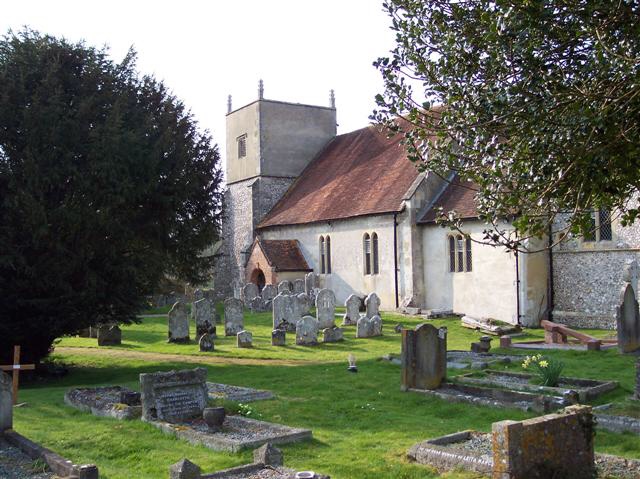
In 1608, for unknown reasons, the Hopkins family lost their lease at Merdon Manor in Hursley where they had been living for several years. Also for unknown reasons, except perhaps a lack of prospects and a need to make money, Stephen signed on as a minister’s clerk for a stint in the newly found colony of Jamestown, Virginia. It must have been terribly difficult for Mary and the three children to be left behind to fend for themselves while waiting for Stephen’s return, or to be called to join him in the New World.
The Sea Venture was the flagship of a fleet of seven ships headed to resupply Jamestown, and bring over their next Governor, Sir Thomas Gates. Hopkins sailed aboard the Sea Venture as assistant to Reverend Richard Buck, and read psalms and Biblical passages on Thursday and Sunday services. The fleet left Plymouth, England on June 2, 1609. By late July they were most of the way across the Atlantic when a hurricane overtook the fleet. As the storm grew the ships became separated. The crew of the Sea Venture took down all their sails. It took eight men on the tiller to try to control the ship’s steering through the tumultuous seas. On the second day, the ship began “spewing her oakum” – the caulking that seals the joints in the hull. The water was already five feet above the the ballast when the leak was discovered. Despite their search , the main source of the leak could not be found. The water spoiled most of the ship’s supply of food and drink. The men and boys took turns pumping, one hour on, one hour off, around the clock. Occasionally a huge sea would engulf the ship, throwing the helmsmen across the deck. St Elmo’s Fire danced in the rigging, a bad omen in the mythology of the day. On the fourth day, when all seemed lost, the storm clouds cleared a little and the crew spotted land. The ship was sinking so badly they did not have time to anchor and take the passengers ashore in a long boat. Instead they sailed full speed onto a reef a half mile offshore. Miraculously, all 140 men and 10 women were ferried ashore with not a single loss of life.
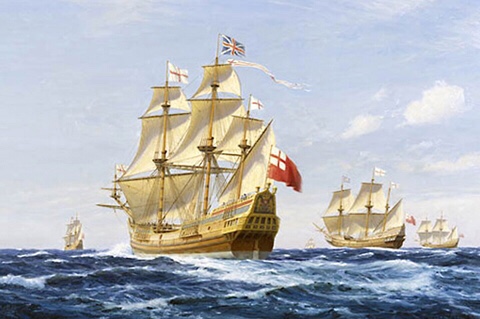
They soon realized they had shipwrecked on one of the most feared places in the world – the “Isles of Devils” – so named because they were thought to be haunted. Even today, Bermuda and its infamous “Bermuda Triangle” conjure superstition amongst sailors. But the islands soon proved to have a temperate climate and an abundance of resources – fresh water, cedar for building houses, fish, shellfish, wild hogs, birds, berries – and they had little trouble sustaining themselves. A small group of mariners set off with the Sea Venture’s longboat to alert the colony at Jamestown of their plight, but was never seen again. The English Governor, Sir Thomas Gates, and fleet captain, Sir George Somers, made plans to build two ships to ferry the party to Jamestown.
But trouble was brewing amongst the castaways. Their contracts said nothing about being forced to build boats on a deserted island. Life was pretty pleasant on Bermuda compared to the famine, Indian attacks, disease, and political corruption that were rife in Jamestown. As a lay-reader for Sunday worship, Stephen Hopkins was familiar with the Scriptures, and thought he found justification for the notion that the castaways were not subject to English authority. On January 24th Hopkins “alleged substantial arguments, both civil and divine, that it was no breach of honesty, conscience, nor religion to decline from the obedience of the governor or to go any further led by his authority, since the authority ceased when the wreck was committed, and with it, they were all then freed from the government of any man.” Hopkins wanted the common laborers to use the occasion of the shipwreck to dissolve existing contracts and hierarchical relationships, and assert personal and religious independence from both Company and Church control; in his view the laborers were no longer indentured.
Going against Feudal authority that had for centuries underpinned English law was mutinous, and Hopkins was sentenced to death. Citing the ruin of his wife and children back home, a tearful and penitent Hopkins was granted a reprieve, and he kept himself out of trouble from then on. On May 10 the castaways set sail on their new ships, and a week later sailed up Chesapeake Bay to Jamestown.
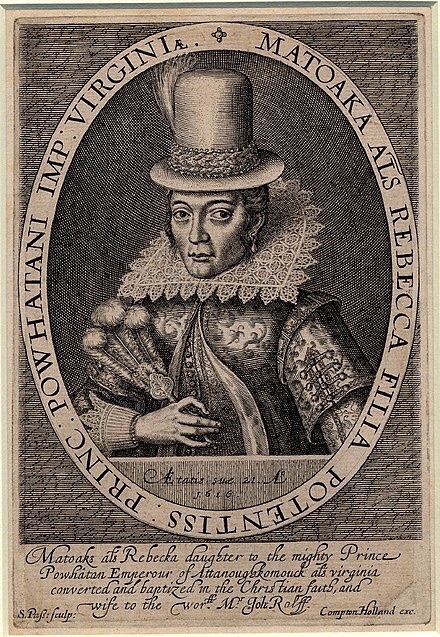
Conditions in the colony were even worse than they had anticipated, and far worse than their shipwrecked existence in Bermuda. The visitors fully expected to starve, get sick, or be killed by Indians. There was little in the way of food or crops, very few tools, and terrible relations with the Indians. But England continued to send relief supplies, and the colonists clawed out a difficult existence. Stephen Hopkins wouldn’t get back to England and his family for another 5 or 6 years. During this time he would have gotten to know his fellow castaway John Rolfe, and very likely witnessed Rolfe’s marriage to a young Indian girl named Pocahontas.
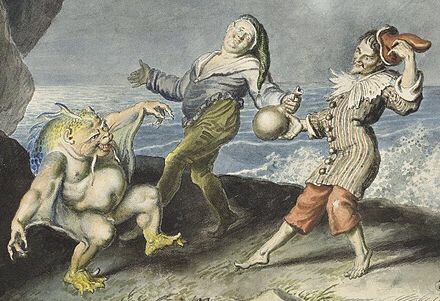
In the meantime, word of the Sea Venture shipwreck got back to England. One of those who took notice was Willam Shakespeare, whose play The Tempest originated from accounts of the event – particularly a first-hand account written by William Strachey who is quoted above in the description of Hopkin’s mutinous preaching. The Tempest includes a character named Stephano who unsuccessfully plots a mutiny to overthrow the leader of the island. “On one level this comedy is the tale of a deposed duke who traps and confounds his enemies on a desolate isle. On another level it is a paean to unbridled freedom in which an airy spirit begs to be relieved of further obligations to magic, in which a nobleman contrives a vision of a land without work, contracts, or a sovereign, and in which a monster sings to a drunken libertine named Stephano, ‘Freedom, hey-day! hey-day, freedom! freedom, hey-day, freedom!’“
While The Tempest was playing in London in 1611, and Stephen was toiling away in Jamestown, Mary Hopkins must have been struggling to raise her three children on her own. She died in 1613, having only lived into her early thirties. The children – including Constance, then seven years old – were given to the care of a Thomas Syms. Stephen managed to get himself back to England around 1616, and in 1618 married Elizabeth Fisher and settled in London.
About this time the group of Separatists who had left England for Leiden, Holland were now planning to sail to the New World aboard the Mayflower. Stephen Hopkins happened to live in the parish where plans were being drawn up between London merchants and the Leiden group. Laborers were needed to help establish the new colony. In exchange for seven years’ labor a grant of land and a share of the joint-stock company could be earned, while basic needs such as food and clothing would be provided. Having no chance to buy land in England, it was a good opportunity for Hopkins, and if he brought his children along they too could earn half-shares in the new Company.
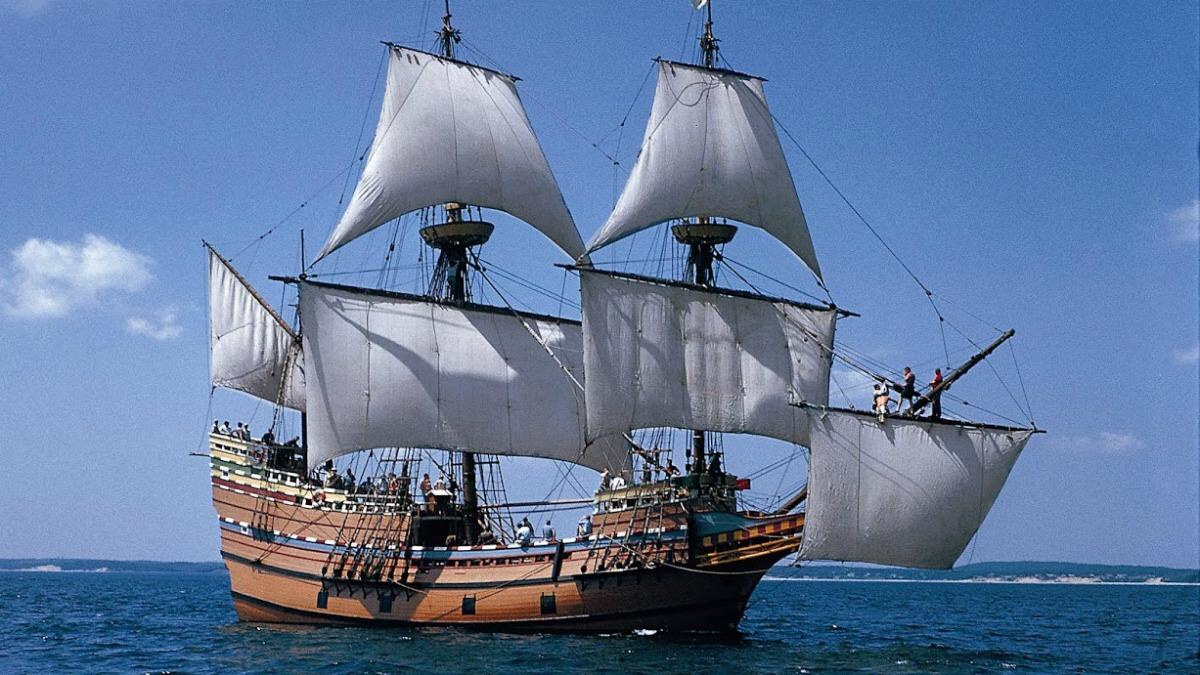
After months of delay and a couple false starts, the Mayflower finally left Plymouth, England on September 6, 1620, bound for the mouth of the Hudson River which King James had given them patents to settle. Elizabeth Hopkins was by now was eight months’ pregnant, and soon gave birth to a son they appropriately named Oceanus. With 102 people crammed below decks in a living area 50 feet by 25 feet, life must have been most uncomfortable. Stephen was the only passenger who had been to the New World, so he must have been a font of information for his fellow travelers.
After two months at sea the crew sighted land, which they identified as Cape Cod. They tried to sail through the dangerous area south of Cape Cod but the shoals and reefs nearly shipwrecked them. The captain headed north to the safer waters of Cape Cod Bay and the Pilgrims decided to check out that area as a place to settle.
This change of destination presented a problem for some of the passengers, however, particularly for Laborers such as Stephen Hopkins who had signed on for the promise of land. How could the Company grant land if they settled an area they did not have patents to? Their contracts granted governing authority to the Virginia Company in Virginia (which Hudson Bay was then part of), but the Company had no authority in New England. The situation was remarkably similar to the Bermuda shipwreck, during which Stephen Hopkins became an outspoken mutineer against the Company’s authority to govern in Bermuda. As William Bradford writes in his seminal account “Of Plymouth Plantation,” one of the rebels proclaimed that “when they came ashore, they should use their own libertie, for none had power to command them.” The Company’s patent was for Virginia and not for New England. And since “ye Virginia Company had nothing to doe” with New England, they were not bound by the Company’s authority.
An account in American Heritage magazine suggests that Hopkins was the ringleader: “There is every reason to believe that it was the same Stephen Hopkins who had cried out for personal freedom a decade before on Bermuda. The nature of the man makes the case. Throughout his life as a garrulous and independent Massachusetts tavern keeper, he remained his own man. And his pragmatic liberal views did not change with his rise in status. One of the most prolific of the Plymouth forefathers, he was also one of the most democratic. Among the Mayflower passengers, only Hopkins had been in the New World before; only he knew how powerful was the allure of absolute freedom in the making of a new world from the wilderness of a new continent.”
The names of those involved in the the threatened mutiny on the Mayflower was never recorded, so we will never know the true extent of Hopkin’s involvement. But what is clear is that after a sixty-six day voyage, when they must have been desperate to get ashore, the Pilgrim leaders took the time to assemble the men aboard ship and forge a compromise – an agreement pledging that they would “covenant and combine ourselves together in a civil body politic … by virtue hereof to enact laws, ordinances, acts, constitutions, & offices, from time to time, as shall be thought most meet & convenient for the general good of the colony.” This is the famous Mayflower Compact, a “statement of revolutionary new principles, an important milestone in our long, hard and often bloody ascent from feudalism, from the degrading “aristocratic” system of power and privilege for the few which had held Europe in irons for centuries. It was a stepping stone in changing the hierarchical structure of government, towards a more democratic system” in the words of historian George Willison. John Quincy Adams later described the Compact as the “first example in modern times of a social compact or system of government instituted by voluntary agreement conformable to the laws of nature, by men of equal rights and about to establish their community in a new country.”
In an interesting twist, another forebear of the Abbot family, William Brewster, is likely the primary author of the Compact. He was the Elder and the only one with diplomatic experience amongst the Pilgrims.
The story of Plymouth Plantation is well known. The Mayflower passengers established a colony at Plymouth, and half of them died during the first winter. Late in the winter they began to have fleeting contacts with the native Indians. Because of his knowledge and interactions with Indians at Jamestown, Stephen Hopkins was charged with making initial contact. An Indian named Samoset befriended the Pilgrims, and took up residence in Hopkin’s home during his visits. Through Samoset they were introduced to Massasoit, head of the Wampanoag, with whom they forged a peace treaty that would last almost fifty years. Hopkins and Edward Winslow became the primary negotiators with Massasoit when difficult issues arose. During visits to the Indian settlement they would sometimes be invited to sleep in Massasoit’s own bed – often with one of his wives and other Indians – who would sing themselves to sleep, a custom the two Pilgrims found rather unusual.
Elizabeth Hopkins was one of only four of the eighteen adult women to survive the first winter. She and Stephen would have a total of seven children together. Constance, Stephen’s daughter from his earlier marriage and an Abbot ancestor, was by now an early teenager and would have been taking on increasing responsibility in the community (Elizabeth Tilley, another Abbot ancestor, was also an early teenager at this time).
By the fall of 1621 the small colony had stabilized. They now had twenty-five men, four women, and twenty-five children, with just enough corn to last through the winter. After their famous “First Thanksgiving” shared with the Indians, things were looking up. Then a ship unexpectedly appeared: the Fortune, carrying thirty men and boys, and three women, sent to reinforce the colony – but carrying no food, tools or livestock. Suddenly, the colony was once again faced with a critical food shortage. To make matters worse, the Fortune returned to Europe carrying a supply of beaver and otter skins that the Pilgrims had collected and that they hoped would boost shares in their Company – but the Fortune was pirated by a French warship and all its cargo confiscated.
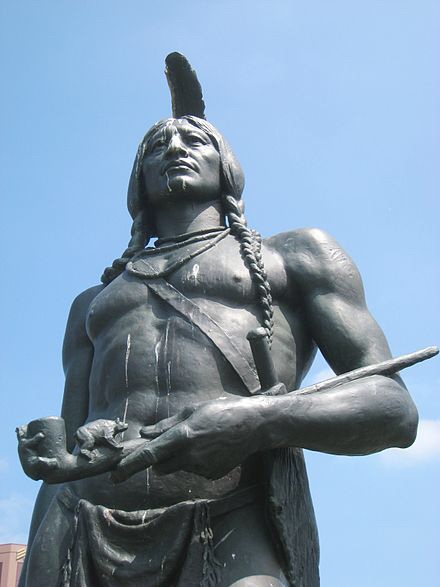
They struggled through with the help of Massasoit, but by now the colony had another severe shortage: women. This was resolved when the ship Anne arrived in 1623, carrying forty women and girls (including William Brewster’s daughter Patience, and Elizabeth Warren, both Abbot ancestors). After the arrival of the Anne, Governor Bradford changed the colony from a collective farm to one where everyone received their own plot of land. The Hopkins’ were granted six acres just south of Town Brook, on what is known today as Watson Hill.
From the earliest days of the colony, Hopkins ran a tavern (it is believed that he and his wife Mary had run an ale house back in England). In 1633 Stephen is listed as one of seven men elected to the governor’s council, which handled civil disputes, and to the tax assessment committee. His own tax assessment was the 6th highest of the ninety taxpayers, suggesting he had become one of the more well-off in Plymouth. By 1637 he is described as a “shopkeeper of strong waters” and there soon follows in the town records a number of charges against Hopkins for allowing unauthorized drinking and for overcharging for his beverages.
Daughter Constance married Nicholas Snow around 1627 or earlier, and the couple later moved to Eastham on Cape Cod – near “First Encounter Beach” where a landing party from the the Mayflower, including Stephen, had first encountered and been attacked by Indians. Constance and Nicholas would have a total of twelve children (including Abbot ancestor Mary Snow, born 1630).
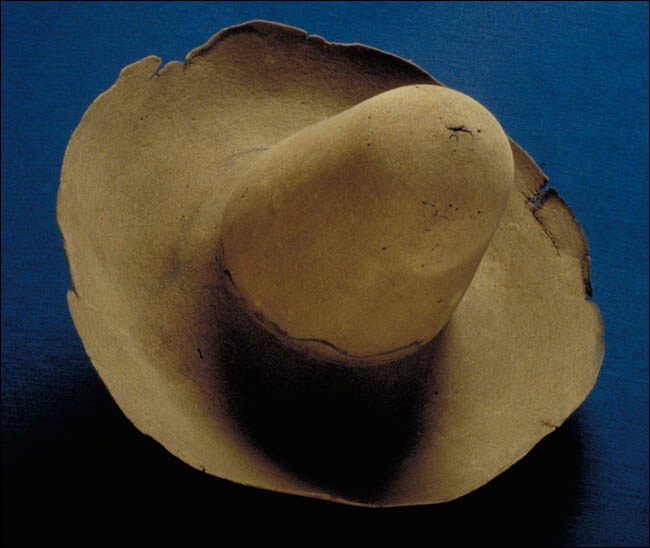
Elizabeth died sometime around 1640. On June 6, 1644, no doubt sensing his mortality, Stephen made out his last will and testament, going into great detail as to the distribution of his livestock, and asking executor Myles Standish to help guide his unmarried daughters in their future marriages. One daughter, Elizabeth, was just sixteen and was to be given to the care of Richard Sparrow. The Sparrow House where she went to live is the oldest surviving house in Plymouth.
Stephen died in July, 1644. He was an ordinary Englishman born of modest standing, who witnessed and participated in some of the most momentous events of his era.
Sources:
I drew heavily on Caleb Johnson’s ”Here Shall I Die Ashore” (2007) in writing this blog. His book is extremely readable and is based in part on recent archival discoveries.
Probably the most authoritative source on the Pilgrim story is Jeremy Dupertuis Bangs, who has been Chief Curator of Plymouth Colony, Curator of the Leiden Pilgrim Documents Center, and founded the American Pilgrim Museum in Leiden. His recent “Strangers and Pilgrims” (2009) is a comprehensive fresh look at the Pilgrim story.
A fascinating article by Avery Kolb (1983) can be found at the following link.
The storm that wrecked the Virginia-bound ship Sea Venture in 1609 inspired a play by Shakespeare— and the survivors’ tribulations may well have sown the first seeds of democracy in the New World:
https://www.americanheritage.com/content/tempest
Finally, “Saints and Strangers” by George Willison (1945) is a very readable and enlightening story.
Postscript
Subsequent to writing this blog, I read a newly-published book which adds new details to the Hopkins story: “A Stranger Among Saints” by Jonathan Mack (2020). This is an excellent complement to Caleb Johnson’s “Here Shall I Die Ashore” (2007).
While Mack largely confirms and expands upon details of Hopkin’s life as summarized in the blog, there are a few points of particular interest that are new and/or give different interpretations gleaned from the historical record. The most significant of theses are as follows:
Hopkins didn’t merely witness John Rolfe’s marriage to Pocahontas, he assisted in the actual ceremony.
Mack believes it unlikely that Stephen Hopkins was one of the ringleaders of the revolt that sparked the Mayflower Compact. Hopkins was by now wealthy enough to have servants, and was increasingly considered one of the leaders of the New World settlers. Instead, Mack believes Hopkin’s two servants instigated the dispute. They were at the low end of the authoritarian hierarchy, and being in Hopkins’ employ would have known of his one-man mutiny on Bermuda under very similar circumstances. Though he might not have personally participated in the Mayflower revolt, Hopkin’s actions in Bermuda set the stage for what occurred on the Mayflower.
The significance of the Mayflower Compact, and the ensuing government established by the Pilgrims, is illustrated by the following anecdote: The Preamble to the Massachusetts State Constitution, written by John Adams, uses language remarkably similar to the Mayflower Compact: “The body politic is formed by a voluntary association of individuals; it is a social compact by which the whole people covenants with each citizen and each citizen with the whole people that all shall be governed by certain laws for the common good.” The Massachusetts Constitution served as the principal model used by the Federal Convention of 1787 in producing the US Constitution.
Perhaps the most interesting illumination in Mack’s research is the critical role Stephen Hopkins played in establishing relations with the Wampanoag. The Indian Chief Massasoit hoped to drive the Pilgrims from their lands; after all, most interactions with earlier European visitors had ended badly for the natives. The first encounters between the Pilgrims and the Indians carried hostile and even violent overtones. When Massasoit sent the Indian Samoset into Plymouth on March 16, 1621, to make contact and ascertain the Pilgrim strength and intentions, the tone was one of mistrust on both sides. Remarkably, Stephen Hopkins invited Samoset to spend the night in his home, notwithstanding the perceived danger to Hopkins’ own wife and children. Mack writes: ”The decision was singularly consequential, for during the night, Hopkins and Samoset somehow changed the dynamic of the relationship between the Wampanoag and the English settlers.” Within days, a peace treaty was forged, and it was only because of Massasoit’s help that the Pilgrims survived the ensuing winter. The peace treaty would last for 50 years, and Plymouth’s lasting peace with the Wampanoag helped draw successive waves of colonists to New England. Had Stephen Hopkins, with his prior experience with Indians and their language in Jamestown, not intervened that first night, Pilgrim and US history might have taken a very different course.
Stephen Hopkins would continue to advocate for Indian rights and respect throughout his life.
Sources of Quotes:
“alleged substantial arguments …” Johnson pg. 44
“On one level this comedy…” Kolb pg. 8
“when they came ashore…” Kolb pg. 9
“There is every reason to believe…” Kolb pg. 9
“covenant and combine ourselves…” Bangs, pg. 611
“statement of revolutionary new principles…” Willison pg. 153
“first example in modern times…” https://marylandmayflower.org/pilgrim-history/
 Abbot and Fletcher Family History
! Max! I found this to be very, very interesting read, and extremely well written.
Itâs not surprising to me that your forbear shouldâve been a vocal proponent of democracy. And a tavern keeper, to boot! That sounds very much in keeping with your heritage.
I would like to get you and my brother Bruce together one of these years to discuss each of your forays into genealogy and historical research. Bruce has some incredibly interesting stories to tell, and is often asked to speak at historical societies.
I hope you and Lynnie are passing these strange days in satisfying ways. And I hope that you are keeping a journal of our collective angst during this centuryâs pandemic, coupled with the bizarre and hopefully unique experience of living under this presidency. Hereâs hoping that this one term presidency is the nadir of our democracy. Love, Colleen
>
LikeLike
Thanks for reading, Colleen – and yes I’d love to meet Bruce sometime. Stay safe and we look forward to seeing you in more normal times, hopefully very soon!
LikeLike