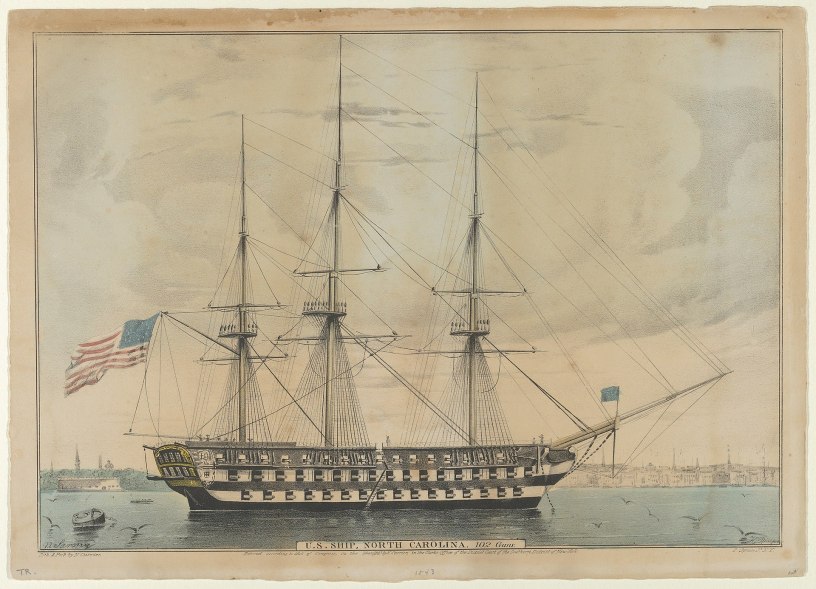
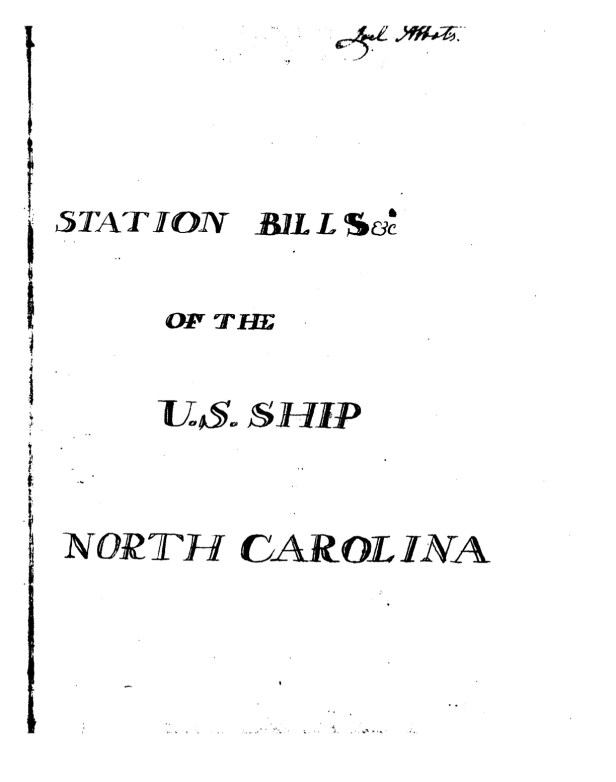
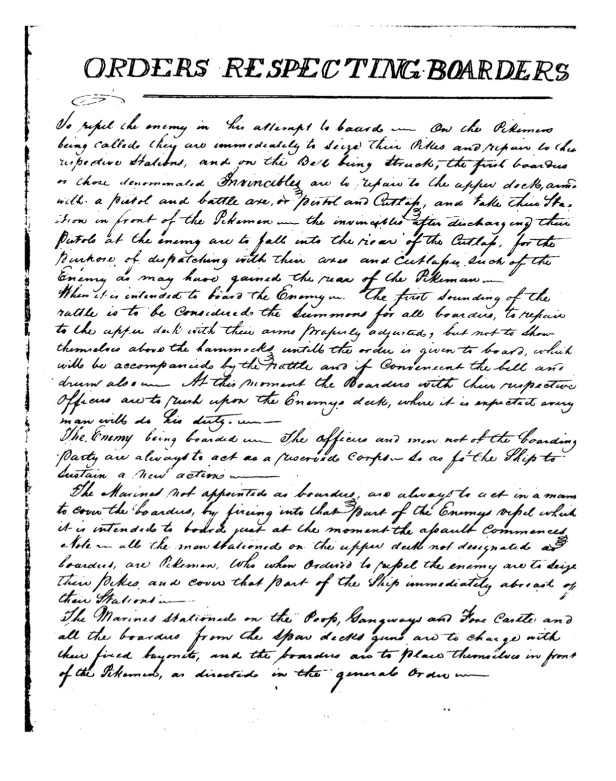
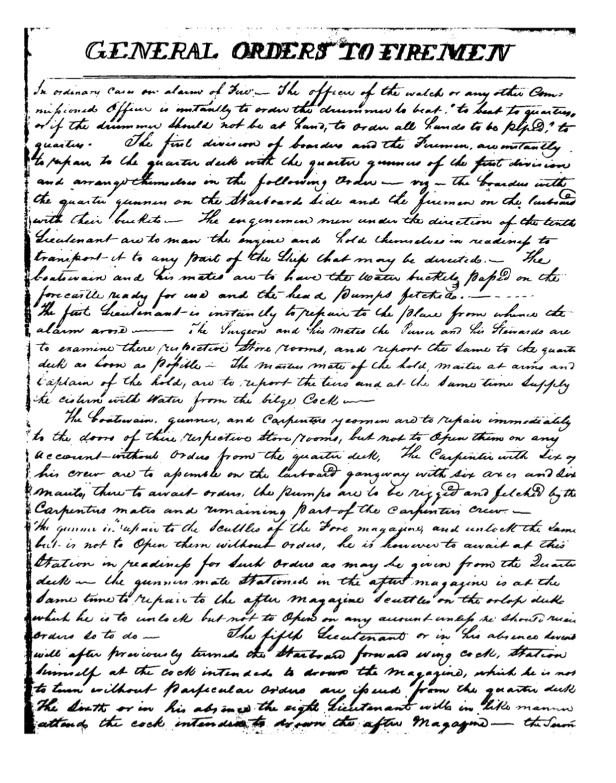
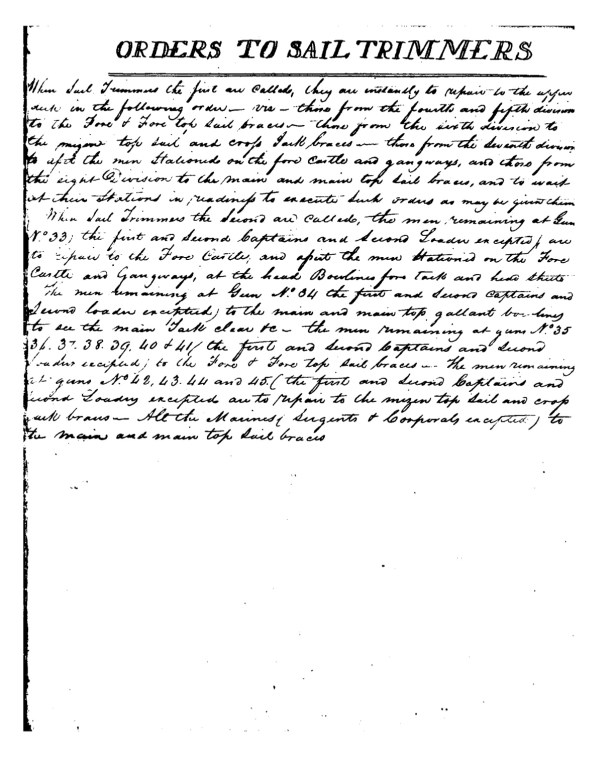
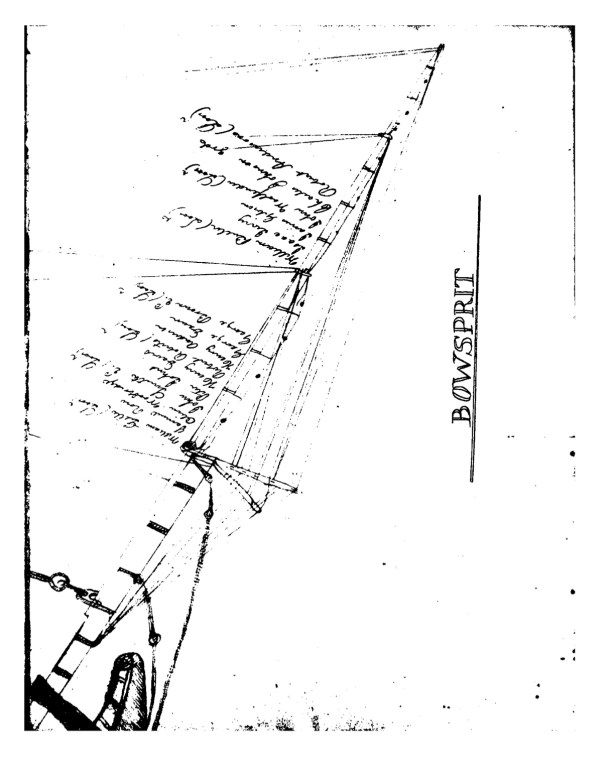
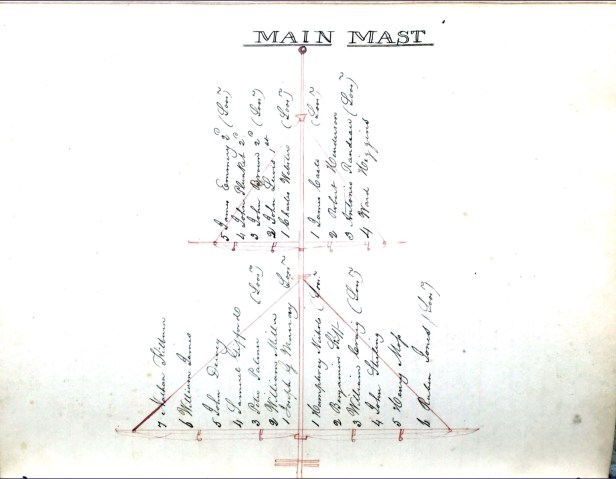
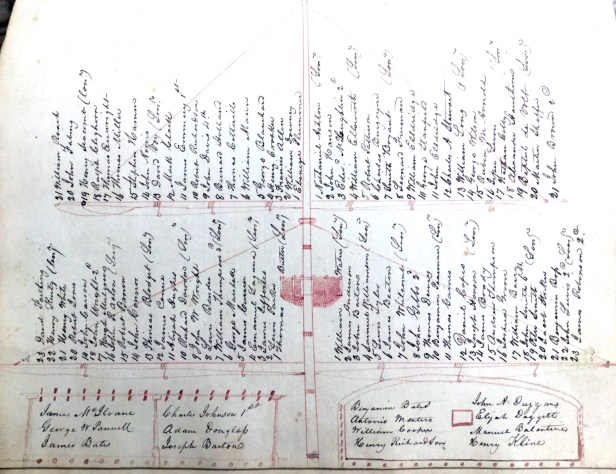
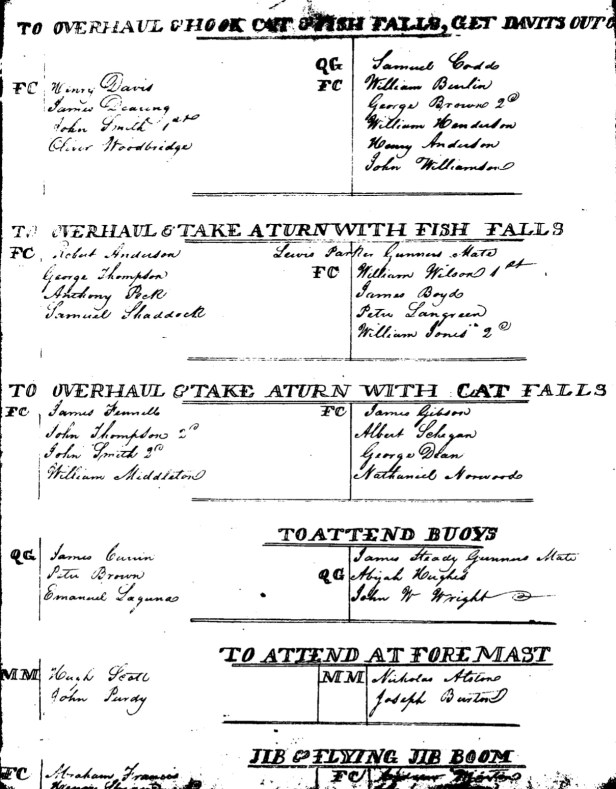
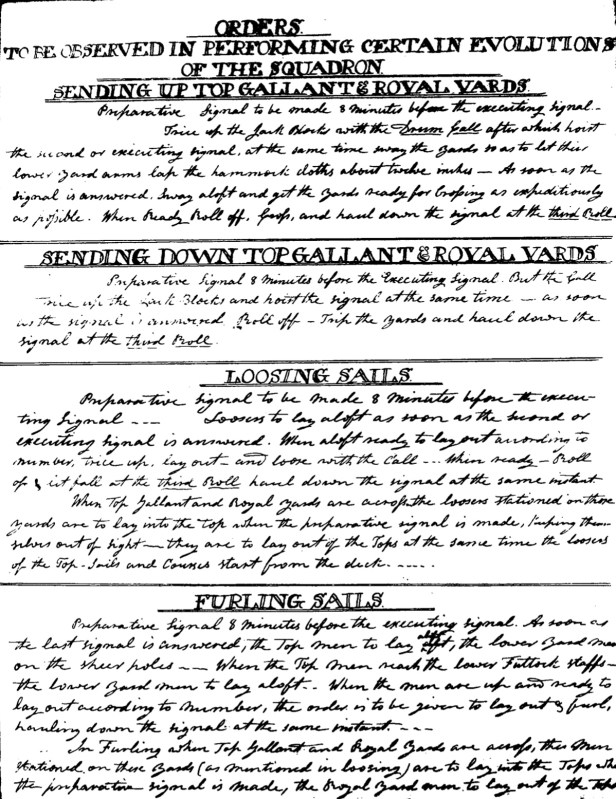
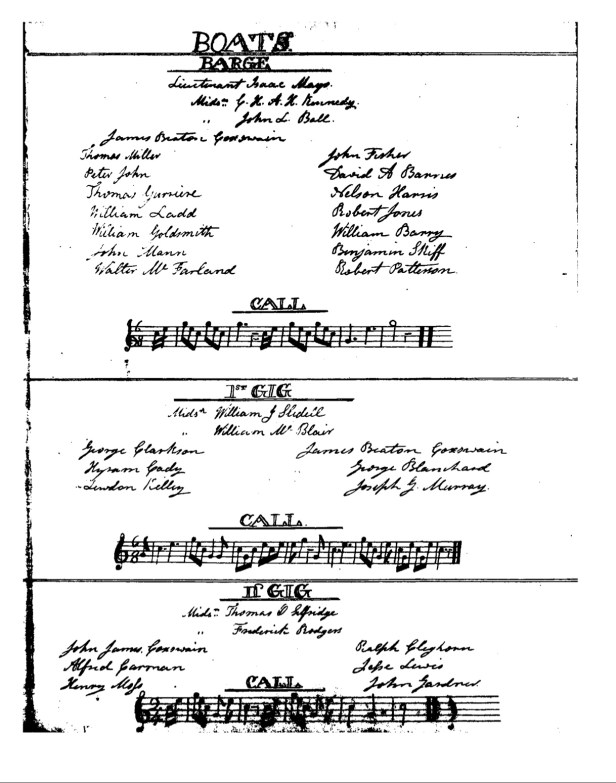
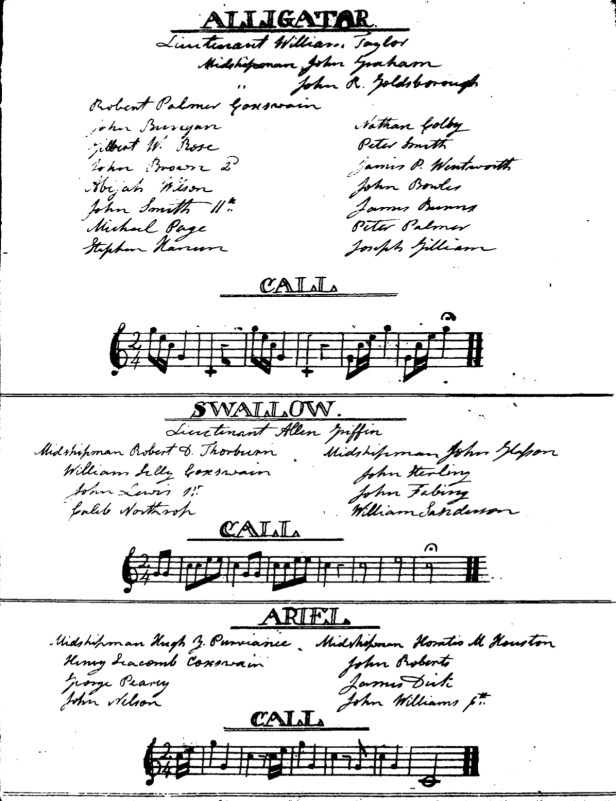
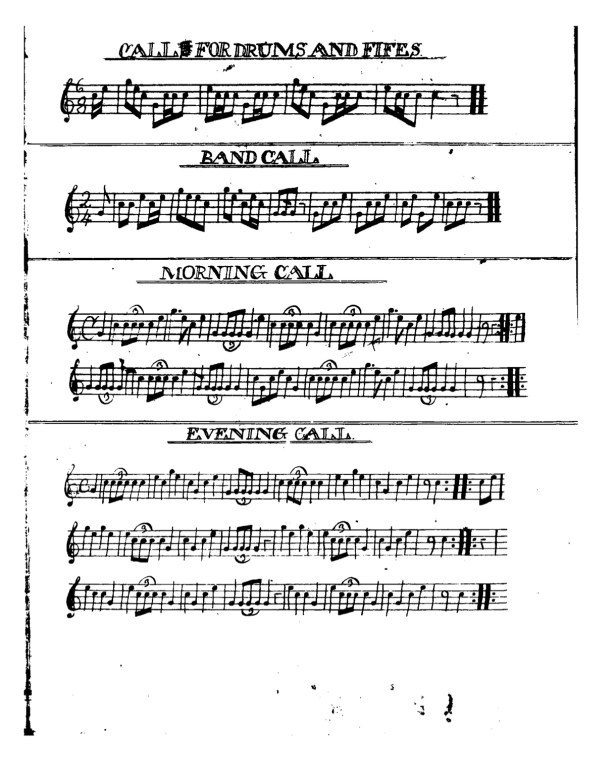
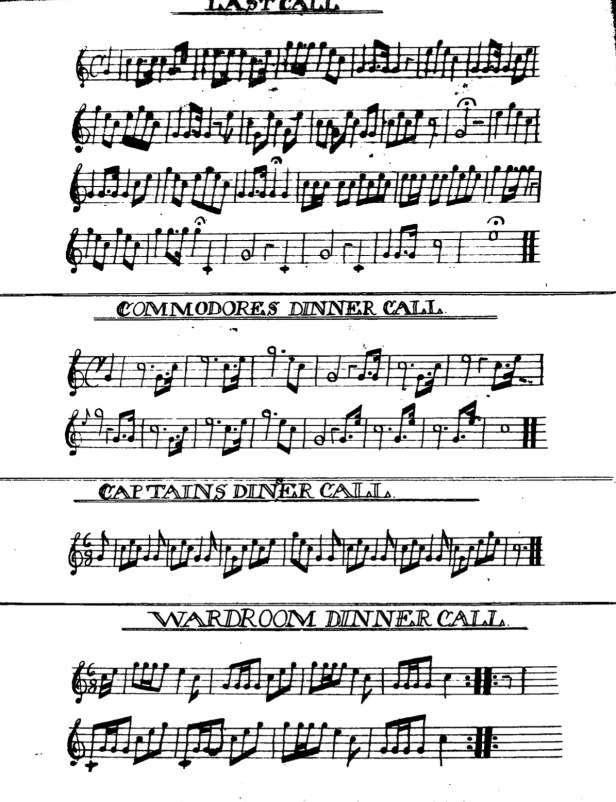
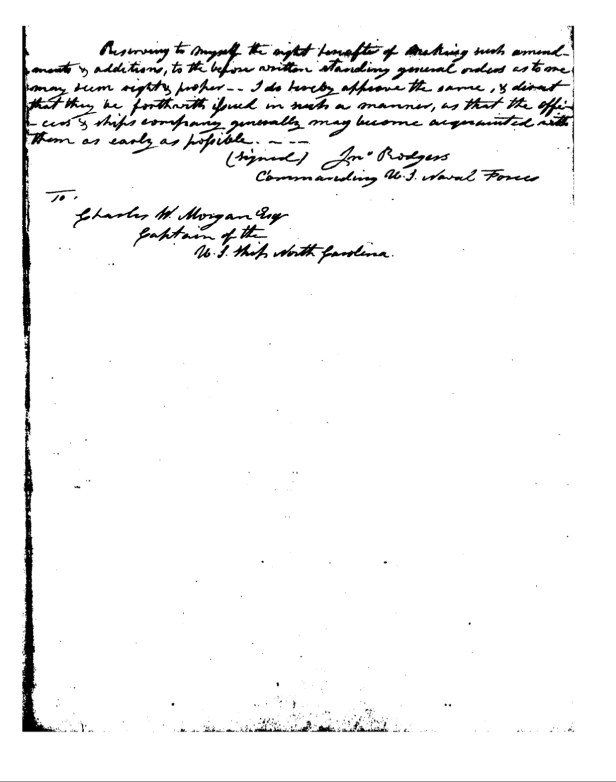
One of the twenty-plus log books that have been passed down from Joel Abbot is a copy of the “Station Bills” for the USS North Carolina dating from the 1820s. “Station Bills” is an official list of the duties and posts assigned to members of a ship’s crew. In a complex sailing warship such as the North Carolina, every activity needs to be coordinated. For example, during “Tacking and Veering” there is an assignment “To let go & overhaul Mizzen Top and Top Gallant Breast Back Stay Falls & Cross Jack Lifts.” During Mooring & Unmooring” there are such assignments as “To Ship & Unship Capstan Bars,” “Clap On” and “Take Off” Nippers (short lines used to help haul in the anchor), and “To Attend Messenger and Palls.” I love the drawings of the spars showing where on the spar each person is assigned, and the musical calls for various orders.
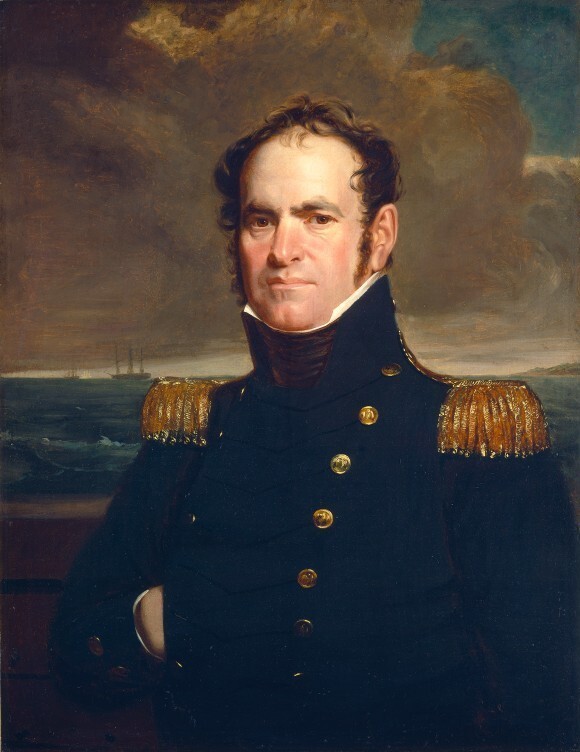
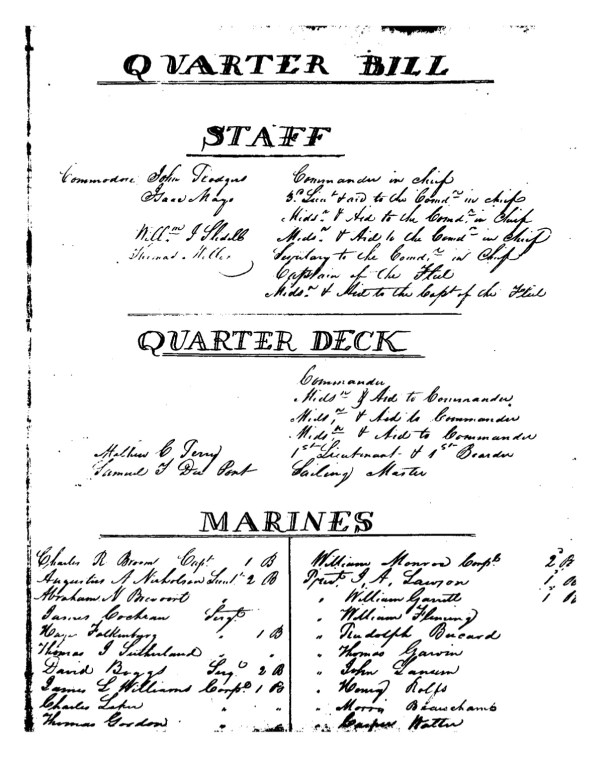
It isn’t clear if Joel Abbot was on this particular ship, but he did serve under Commodore Rogers at various points in his career. Rogers used the North Carolina as his flagship during a Mediterranean cruise. Interestingly, Matthew C. Perry is included in the Quarterdeck crew – Abbot and Perry served together frequently and developed a warm friendship which continued right through the expedition to Japan in the 1850s.
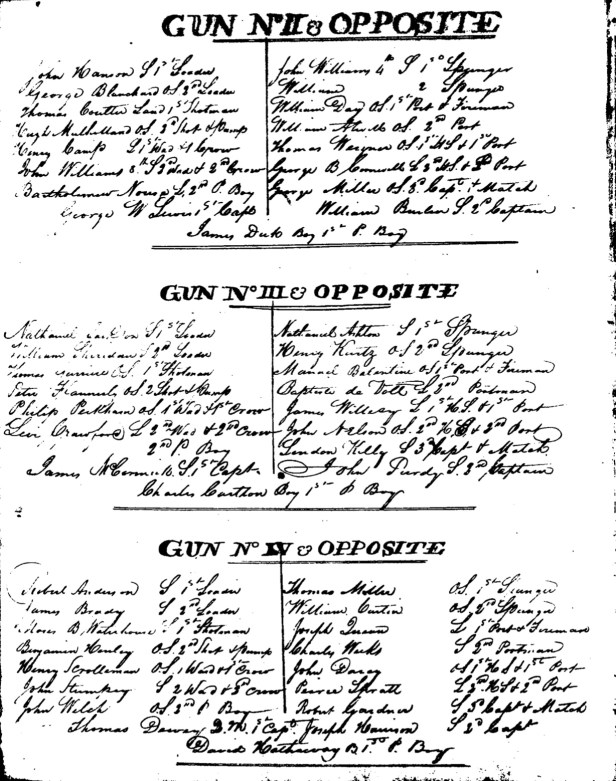
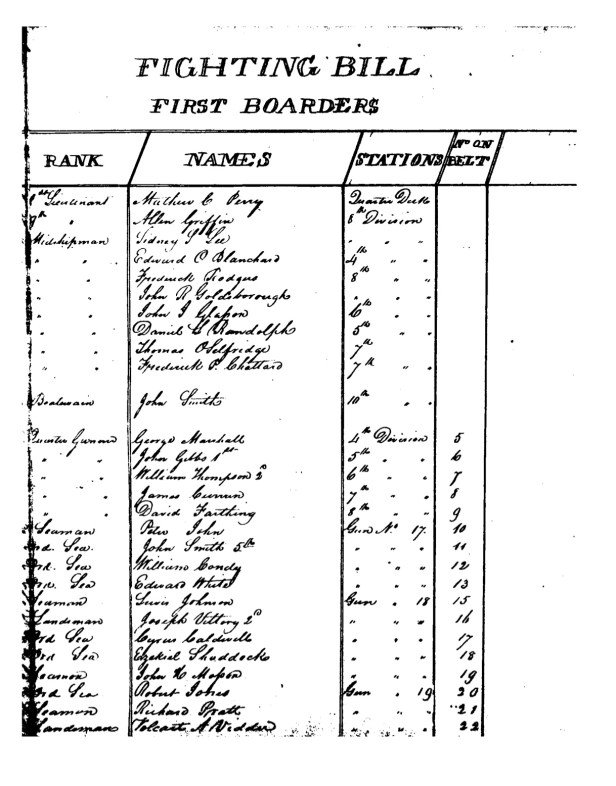
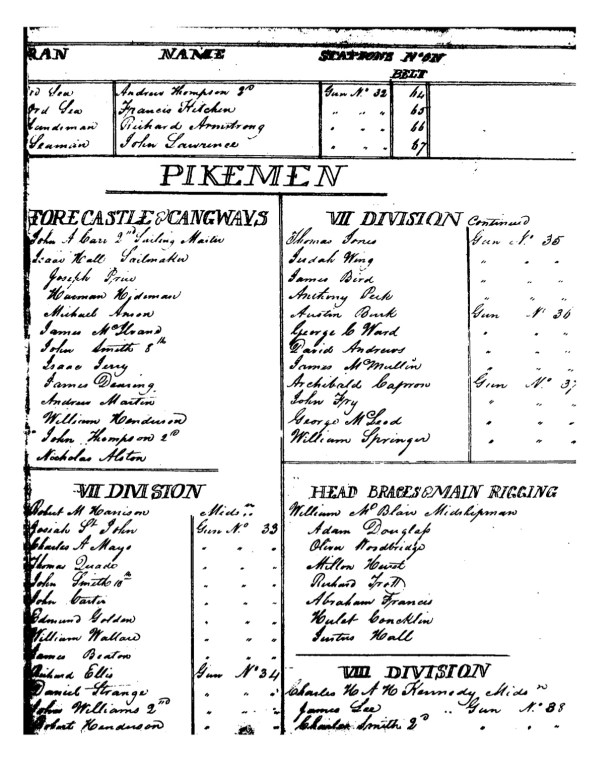
Several years ago I had the entire book digitalized. At 190 pages it is too long to post here in its entirety, but I have created a Table of Contents and included below a sampling from each section of the book.
First, some information about the ship from WikiPedia:
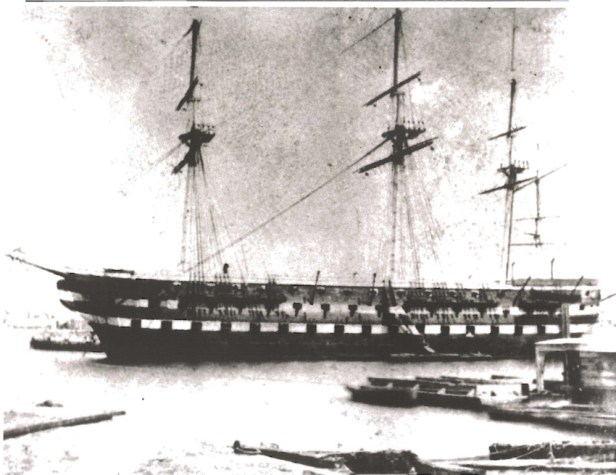
USS North Carolina was a 74-gun ship of the line in the US Navy. One of the “nine ships to rate not less than 74 guns each” authorized by Congress on 29 April 1816, she was laid down in 1818 by the Philadelphia Navy Yard, launched on 7 September 1820, and fitted out in the Norfolk Navy Yard. Master Commandant Charles W. Morgan was assigned to North Carolina as her first commanding officer on 24 June 1824.
Considered by many the most powerful naval vessel then afloat, North Carolina served in the Mediterranean as flagship for Commodore John Rodgers from 29 April 1825 – 18 May 1827. In the early days of the Republic, as today, a display of naval might brought a nation prestige and enhanced her commerce. Such was the case as Rodgers’ squadron which laid the groundwork for the 1830 commercial treaty with Turkey opening ports of the Eastern Mediterranean and the Black Sea to American traders.
Length 196 ft
Beam 54 ft
Draft 22 ft
Table of Contents
Quarter Bill Staff and Marines (pg 4-6)
Gun Assignments (pg 6-27)
Fighting Bill [ie personnel assignments]
First Boarders and Marines (pg 28-33)
Second Boarders and Pikemen (pg 34-37)
Orders Respecting Boarders (pg 38)
Firemen and General Orders to Firemen (pg 39-41)
Sail Trimmers and Orders to Sail Trimmers (pg 42-46)
Pumpmen, Portman (pg 48-52)
Watch Bill (pg 52-67)
Loosing and Furling Assignments (pg 68-77)
Mooring and Unmooring Assignments (pg 78-93)
Making Sail and Getting Underway (pg 96-111)
Reefing and Hoisting Assignments (pg 112-128)
Tacking and Veering (pg 129-142)
Mess Bill (pg 143-146)
Musical Calls (pg 150-156)
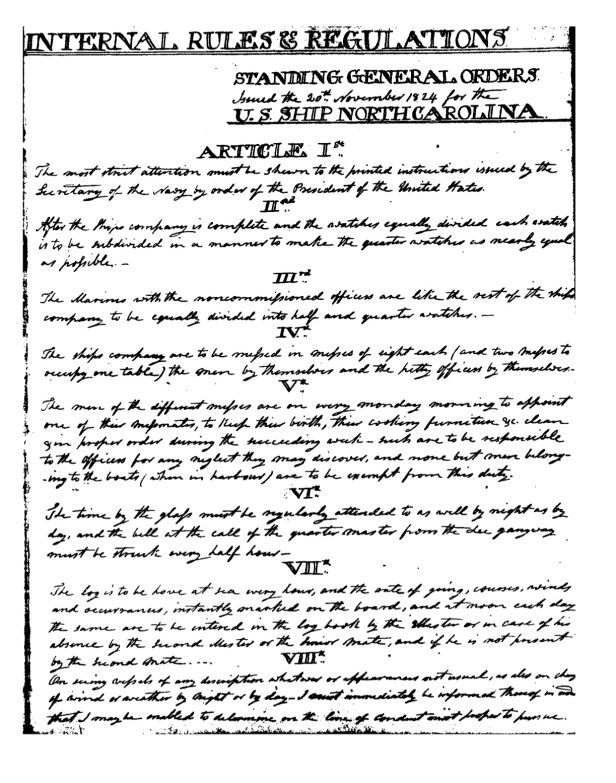
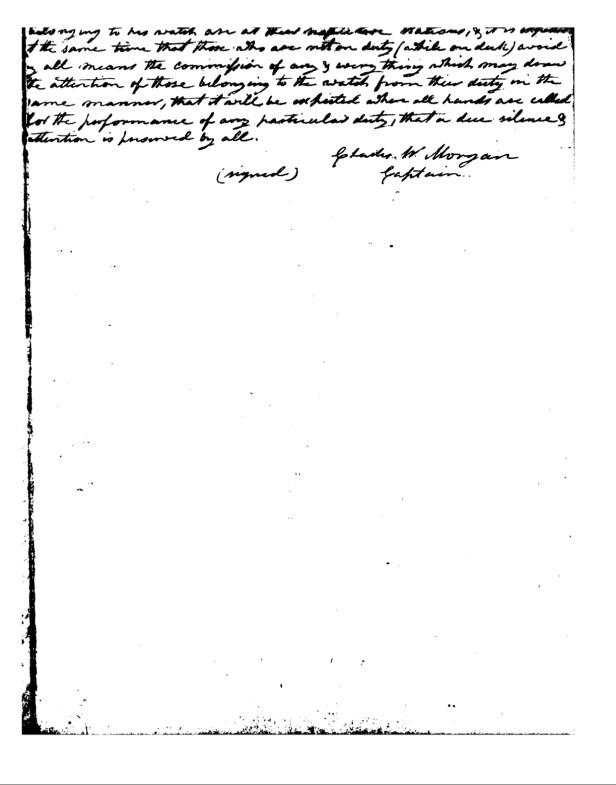
Internal Rules and Regulations (pg 162-178)
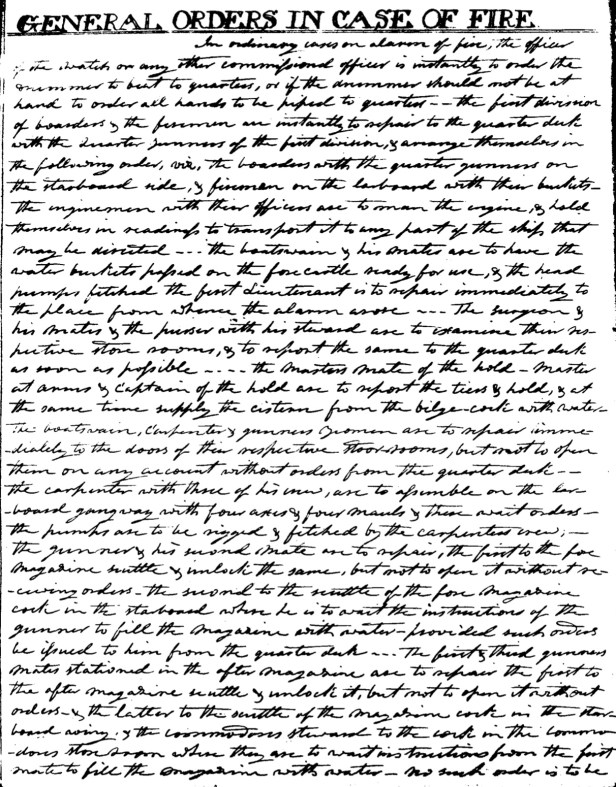
General Orders in Case of Fire (pg 179-180)
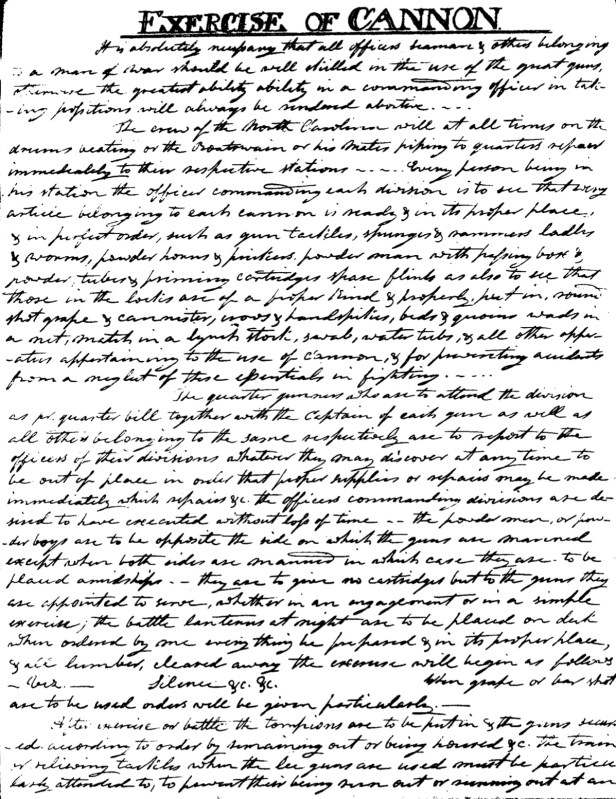
Exercise of Cannon (pg 181-182)
Other Orders (pg 183-191)
 Abbot and Fletcher Family History